At Golf Sainte Baume, we are committed to protecting our natural environment.
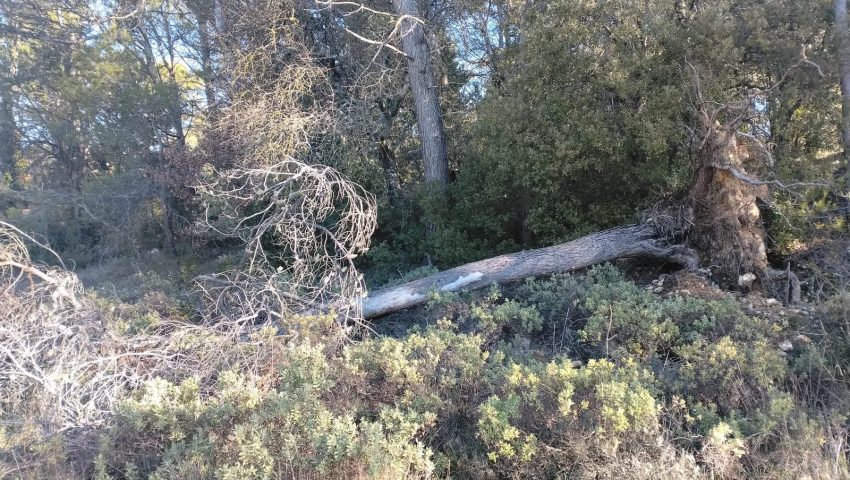
One of our key initiatives is the conservation of aging, hollow, or dead trees in non-playing areas. These trees are not only witnesses to the passage of time, they are havens for wildlife and important links in the course’s ecosystem.
Why are these trees so valuable?
Aging, hollow, or dead trees are not simply remnants of the landscape: they provide essential habitats for a multitude of species.
- Nesting birds: some hollows are home to protected species such as the little owl and the great spotted woodpecker.
- Bats: many species use hollow trunks or bark as shelters for breeding or hibernating.
- Insects and fungi: dead wood and stumps are complex micro-ecosystems that promote nutrient recycling and soil health.
The disappearance of these trees, whether intentional or accidental, disrupts the biological cycle of these species and can have long-term consequences for the ecological balance of the site.
Preserving nature without compromising safety
At Golf Sainte Baume, each tree is assessed according to its health, stability, and ecological value. When the safety of golfers is not compromised, aging or dead trees are left in place, particularly in out-of-bounds areas.
This approach has several advantages:
- Preservation of natural habitats: hollows and dead trunks become refuges for local wildlife.
- Support for biodiversity: the insects and fungi that colonize these trees play a key role in nutrient recycling.
- Regulation and conservation: certain protected species require the conservation of trees as a legal measure.
Thus, the conservation of trees in areas outside the course is not limited to an aesthetic approach, but contributes to a complete and sustainable ecosystem.


A sustainable approach with golfer awareness
The two eco-labels awarded to Golf Sainte Baume enable us to apply best environmental practices. The integration of mature trees into our non-playing areas is a concrete example of this long-term vision, where the beauty of golf coexists with the protection of nature.
Every decision, from preserving a tree trunk to maintaining wild areas, aims to:
- Minimize the impact on local species
- Ensure player safety
- Raise member awareness of the importance of biodiversity
In this way, every tree that is preserved becomes a true ally of the Golf Sainte Baume ecosystem. Our members play a key role in preserving nature. Golfers are encouraged to:
- Observe and respect no-play areas
- Understand the ecological importance of old trees
- Appreciate the diversity of species present on the course
This interaction between sport and nature enriches the playing experience and shows that golf can be much more than just a sport, but also a moment of observation and respect for living things.


A model for local biodiversity
The strategy and ongoing commitment of Golf Sainte Baume within the Resonance Golf Collection show how a golf course can be much more than just a sports field:
- A place of ecological preservation
- A space for well-being surrounded by nature
- A showcase for Mediterranean biodiversity
By leaving aging and dead trees in non-playing areas, the club contributes to the protection of endangered species, soil fertility, and ecosystem resilience.
Preserving old and dead trees at Golf Sainte Baume
The preservation of aging or dead trees at Golf Sainte Baume illustrates the concrete commitment of a golf course rooted in its generation and location: combining sports, respect for the environment, and protection of biodiversity.
Thanks to this sustainable approach, each tree that is preserved provides a refuge for wildlife, plays a key role in the biological cycle, and symbolizes the vital harmony between nature and golf.
Golf Sainte Baume thus sets an inspiring example for all clubs seeking to combine sporting performance with ecological responsibility.