The effect of excessive rainfall on a golf course
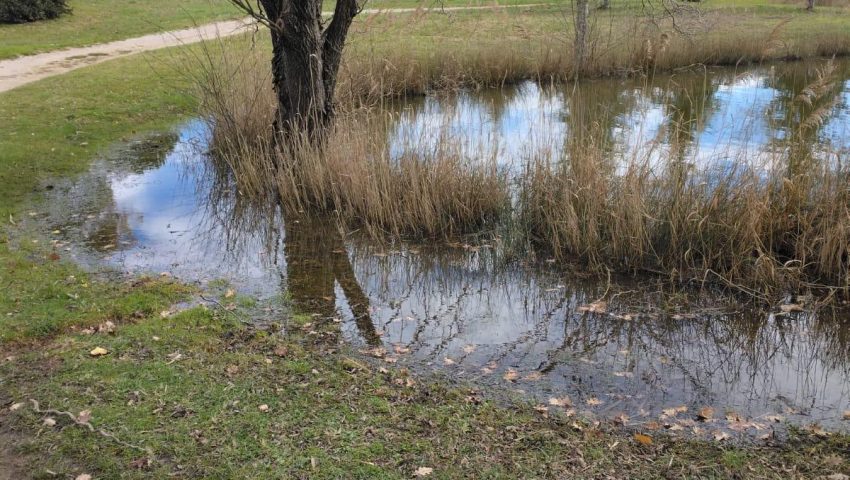
Rain is essential to the life of a golf course. It nourishes the soil, supports grass growth, and contributes to the natural balance of the site. But when rainfall becomes too frequent or too intense, as it has been in recent months, water can quickly become a factor that weakens the course.
At Golf Sainte Baume, we closely monitor the effects of weather conditions on the course. As with all Resonance Golf Collection courses, our management is based on a subtle balance between sporting performance and respect for the natural environment.


Why does grass suffer when there is too much water?
Grass is particularly sensitive to waterlogging. Contrary to popular belief, more water does not mean better health.
When the soil is waterlogged:
1. Oxygen is becoming scarce in the soil.
A balanced soil contains both water and air. But in the event of heavy rainfall, the soil pores fill completely with water, preventing oxygen circulation.
The roots, deprived of air, begin to suffocate. They breathe less efficiently, develop more slowly, and become more vulnerable.
2. Nutrient absorption is disrupted
The minerals necessary for growth (nitrogen, potassium, phosphorus, etc.) are more difficult to absorb when the soil is saturated.
In some cases, they can even be washed away by water, moving away from the root zone. The grass then shows visible signs: loss of vigor, slower growth, and less intense color.
3. The root system weakens
In permanently wet conditions, roots tend to remain on the surface, where oxygen is still available.
As a result, the turf becomes less firmly anchored. It is less resistant to trampling, climatic variations, or periods of heat that may follow rainfall. This phenomenon causes lasting damage to certain areas of the course.
4. Fungal diseases develop
Constant humidity creates an environment conducive to pathogenic fungi. Certain diseases can appear quickly.
These diseases are not just aesthetic problems: they reflect a biological imbalance in the soil that must be corrected with precision.
5. Soil compaction is worsening
The combined effect of rain and repeated use by players or maintenance equipment can cause the soil to compact.
Compacted soil retains more water, further limiting oxygenation and slowing down the natural regeneration of the turf. This can become a vicious cycle if no action is taken.


What are the medium-term consequences?
When these phenomena occur, the grass may:
- gradually turn yellow
- lose density
- become more sensitive to stress
- develop weakened areas
In extreme situations, certain parts of the vegetation cover may temporarily disappear, requiring specific interventions. At Golf Sainte Baume, the aim is to anticipate these effects in order to preserve the quality of play while respecting natural cycles.
Protect the most sensitive areas
Certain areas of the course are naturally more vulnerable:
- pathways
- the approaches to tees
- areas near greens
- high-traffic areas
During wet periods, the ground in these areas is more exposed to trampling, which increases mud formation and compaction. To limit these impacts, simple but effective measures are put in place:
- marked paths
- rope barriers
- appropriate signage
These measures help to channel movement and protect fragile surfaces. They help to keep the course playable while promoting the natural regeneration of the turf.
Sport and nature: responsible management for a preserved balance
At Resonance Golf Collection, course management is based on a sustainable and rational approach.
In the face of excessive rainfall, this involves:
- closely monitoring soil conditions
- targeted interventions
- adapting maintenance practices
- raising awareness among players
Every decision is aimed at preserving soil structure, encouraging deep rooting, and maintaining a stable ecological balance.
At Golf Sainte Baume, we take a long-term view: protecting today to guarantee the quality of the course tomorrow.
A golf course is a living space. It evolves with the seasons, temperatures… and rainfall.
Understanding the impact of excess water makes it easier to accept certain temporary measures put in place after severe weather. These adjustments contribute to the sustainability of the course and the quality of play in the long term.
Each weather event is also an opportunity to remember that a course is an ecosystem. The attention paid to the soil and turf reflects our commitment to providing a high-performance playing environment while respecting the natural balance.
Because healthy turf depends not only on the water it receives, but also on how it is cared for.